
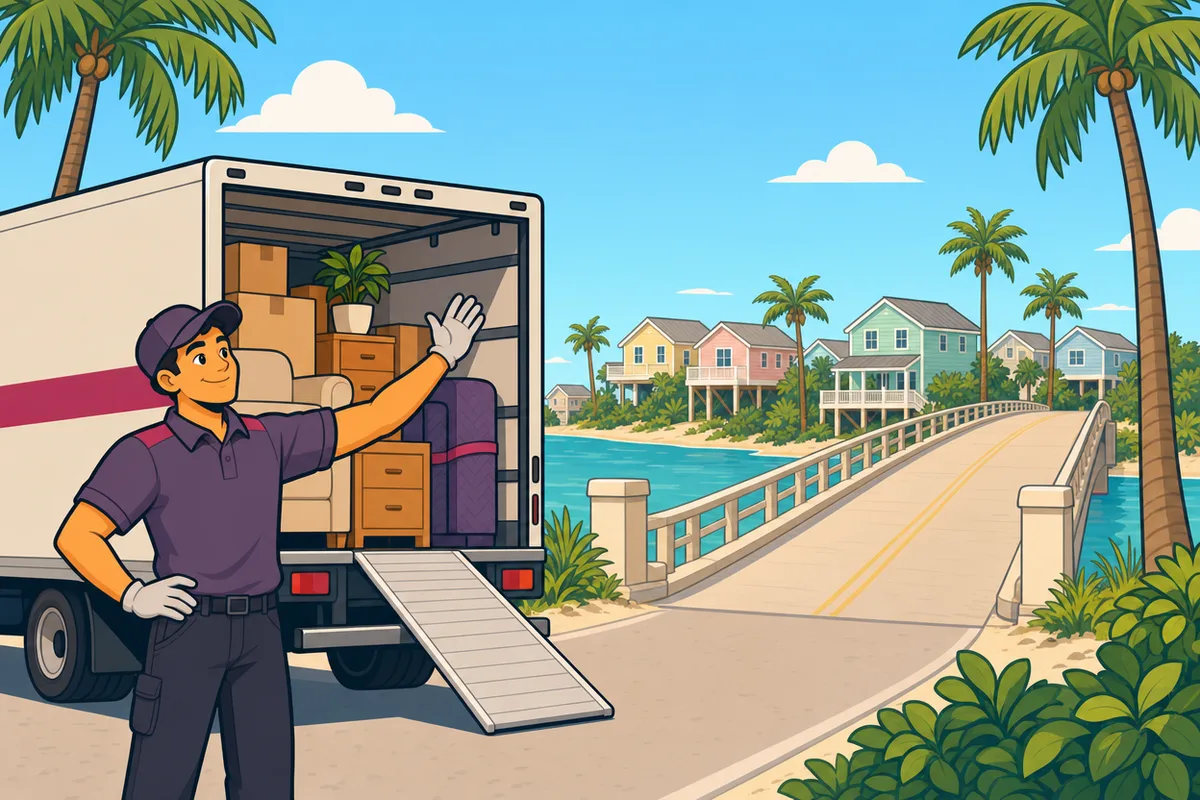
Anna Maria Island is seven miles of barrier island (the towns of Anna Maria, Holmes Beach, and Bradenton Beach) and moving day there works differently than anywhere else in Manatee County. Two bridges, streets that were laid out for golf carts and beach cruisers, and parking rules that differ by city: none of it is hard if you plan for it, and all of it is expensive if you don’t.
We move households onto and off the island, and the lesson is the same every time: a crew that treats an island job like a mainland move loses hours. This guide covers bridge timing, parking, stairs, and salt air.
Bridge logistics come first
Both Manatee Avenue (SR-64) and Cortez Road (SR-684) connect the island to the mainland. In summer and on weekends, both roads can back up, so a crossing can take much longer than on a quiet weekday. A truck arriving at noon has already lost its margin.
We build the crossing into the schedule instead of leaving it to chance. The estimate shows the hourly time, and a trip charge from Bradenton, when it applies, appears as its own line. That way, traffic does not become a surprise on moving day.
- 8:00 AM crossing: light traffic in both directions, legal parking still findable, a full day of work ahead.
- 11:00 AM crossing: beach traffic building, parking tightening, the margin for the day thinning.
- 2:00 PM arrival: peak bridge traffic in season, plus the hottest, heaviest hours of the day.
The pattern is simple: the later the crossing, the less margin the day has. The parking passes, the stairs, and the salt cost you minutes; the bridges can cost you hours.
Where a truck can legally stand
Parking rules differ by city on Anna Maria Island. Anna Maria, Holmes Beach and Bradenton Beach each have their own rules, so check the rules for your own city. Many streets use passes or time limits, especially in season, and some streets are narrow for a full-size truck.
Before moving day we confirm where the truck will stand and whether the city or the building needs advance notice. A truck parked far from the door turns every item into a long carry, and long carries are the slowest thing a crew does.
Stilt homes mean stairs, not elevators
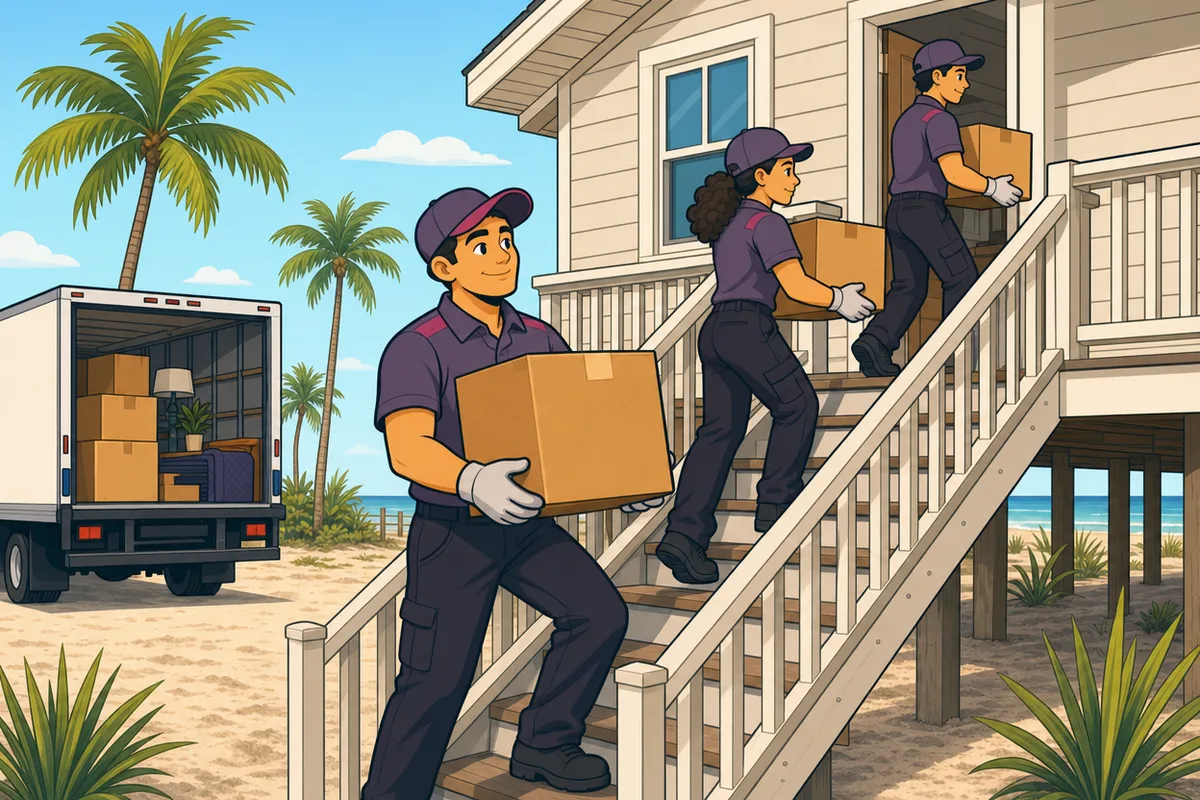
Many island homes sit on pilings, so the ground floor is often carport or storage and the living space sits one or two flights up. There is no elevator to reserve, and stair climbing adds time and affects crew size. We plan crew size from the access details in the estimate.
Sand, salt, and what we pack separately
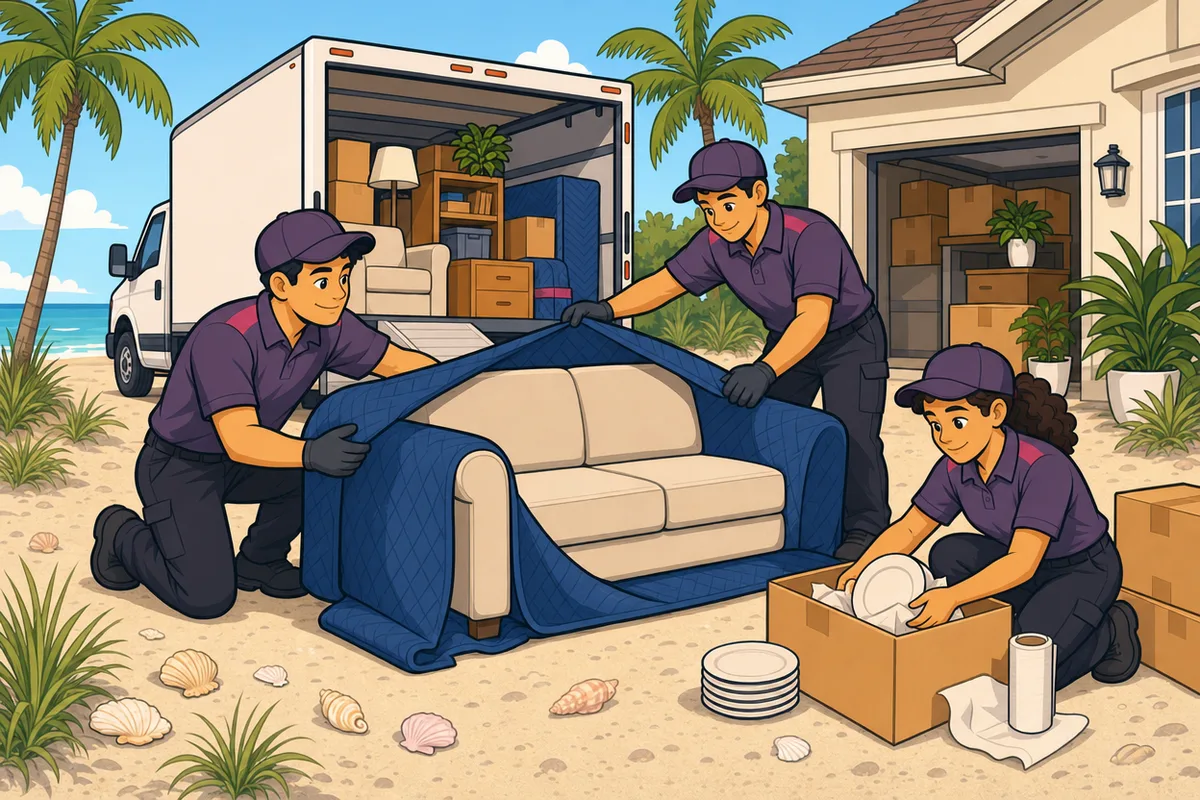
Island households own things mainland ones mostly don’t: kayaks, paddleboards, beach chairs by the dozen, fishing gear, and patio furniture that has spent years in salt air. None of it belongs loose in the truck next to your mattress.
We treat these items as their own category: soft goods are bagged so sand stays out of the truck’s padding, metal frames are wiped and wrapped against salt corrosion, and anything that will live outside at the next place is kept separate from indoor furniture. Our packing and unpacking service handles the full sort if you would rather not spend your last island week holding a roll of tape.
Always book the morning
The single most useful rule for an island move: start early. A crew rolling at 8:00 AM crosses before traffic builds, parks before the beach crowd, and finishes before the afternoon heat makes stair work brutal. Every hour you push the start back costs you on the bridges and the parking at once. The same logic applies to homes on Longboat Key and along the other barrier islands: the morning window is the one worth fighting for.
If you are moving to, from, or within Anna Maria Island, contact us with your address and dates, and we will go over the access questions with you before we quote.